Simple activities. Colorful little moments.

Free Printable Pretend Vet Checkup for Stuffed Animals
Download a pretend vet checkup sheet for stuffed animals. Set up a toy clinic with drawing prompts, gentle role play and simple ways to take turns.

This printable pretend vet checkup gives a stuffed-animal clinic a simple beginning, middle and end. A child welcomes a toy, notices something about it and draws a care plan. The free sheet leaves room for pictures, so writing is optional. Use plush toys only: these prompts are for imaginary play, not for examining or treating a real animal.
Download the one-page checkup sheet
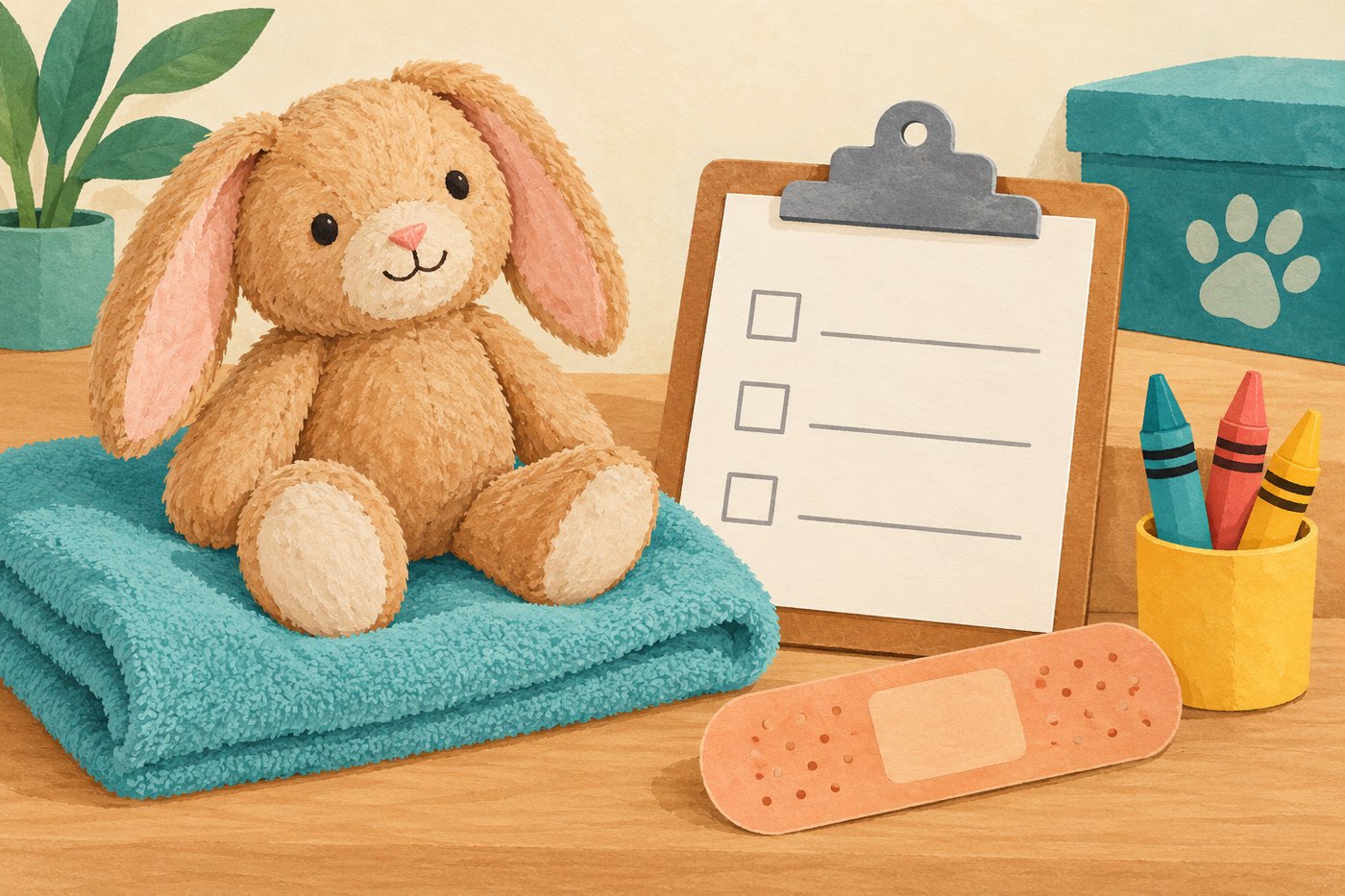
The PDF includes spaces for the toy’s name, a picture of the patient, the reason for its visit, three observation prompts and a pretend care plan. Print in portrait orientation with fit to page on A4 or US Letter paper. The article image illustrates the scene; download the actual form below.
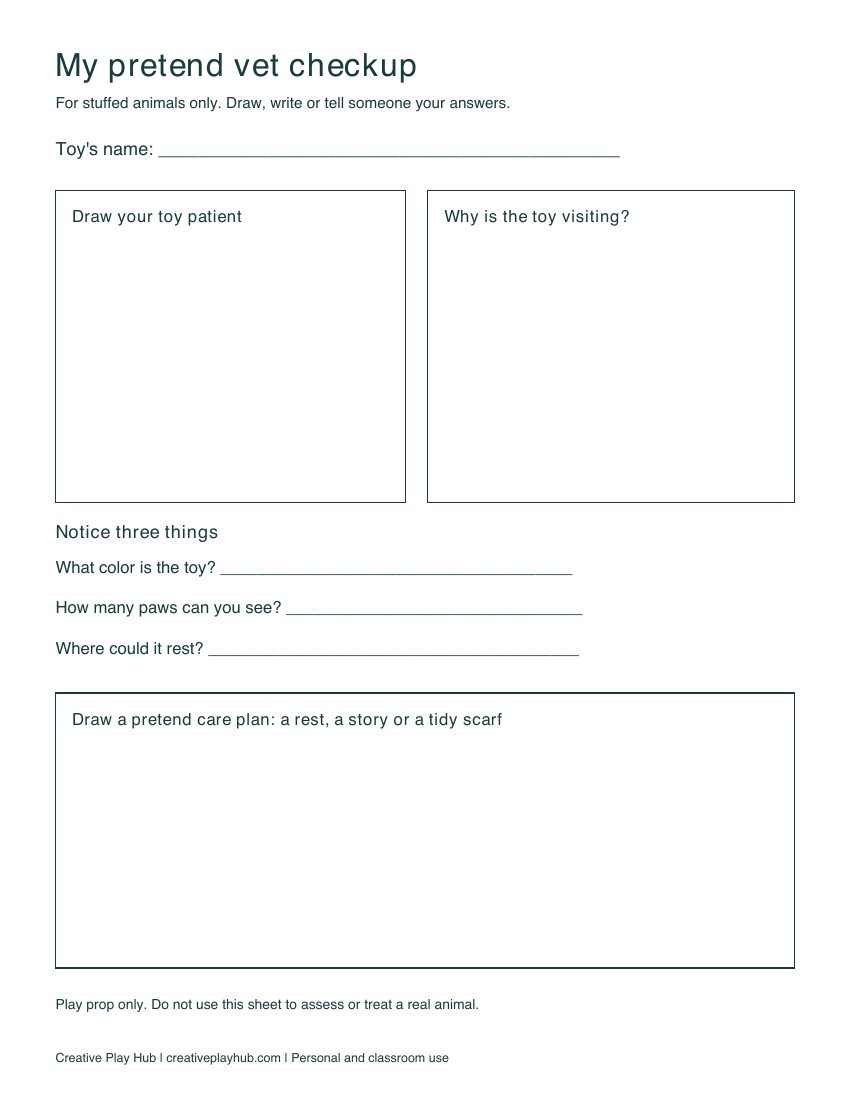
One sheet can serve one toy visit. A child can dictate answers to an adult, draw in the boxes or leave sections blank. Use invented names rather than personal contact details. The page is a play prop, so there is no need to complete it like an official record.
Set up a clinic with soft, familiar props
Choose one or two stuffed animals, a folded towel, crayons and a clipboard or piece of cardboard. A basket can be the waiting room. Large strips of paper can represent bandages, placed loosely on top of a toy and removed after play.
Keep real medicines, sharp tools, elastic loops and medical equipment out of the setup. Do not wrap anything around a child or a real animal. If a toy has loose parts or damaged seams, choose another patient. A simple pretend conversation works just as well without extra equipment.
Give each visit a clear sequence
First, welcome the toy and decide why it came. A rabbit might feel tired after an imaginary picnic, or a teddy might want its scarf checked. Draw the patient in the large box. Then use the three prompts to notice its color, count its visible paws and choose a comfortable resting place.
Finally, draw a pretend care plan. Resting on a towel, hearing a story or having a scarf straightened are enough. The plan does not need a diagnosis or a cure. End by returning the toy to its owner and placing the completed sheet beside it.
Share the roles without rushing
For two children, one can be the toy’s owner and one the clinic helper. Swap after each visit. A third player can welcome patients or draw the waiting-room sign. If there is one child, the adult can voice the toy while the child asks questions.
Keep visits short at first. If the writing interrupts play, record just the name and one drawing. If someone does not enjoy the clinic theme, offer a toy grooming salon or a cozy resting room using the same supplies. There is no need to act out an injury to make the activity interesting.
Extend the story and store the kit
Add a follow-up visit where the toy tells the helper what happened next. Compare the two drawings and let the child change the story. You can also sort completed sheets by toy or clip them together as a small pretend clinic book.
Store the sheets and crayons with the towel so the activity can be reopened easily. Remove any paper strips from the toys after playing. For another role-play setting, use our pretend restaurant menu. A play post office can deliver imaginary appointment invitations without using anyone’s real address.