Simple activities. Colorful little moments.

Free Weekly Kids Activity Planner: A Flexible Printable
Download a free weekly kids activity planner with space for ideas and supplies. Plan a few simple activities while leaving room for rest and repeats.

A weekly kids activity planner can save you from deciding what to do at the busiest moment of the day. It does not need to become another schedule to complete. Use this free printable to jot down a few possibilities, note the materials you need and leave plenty of space for changes.
Download the free weekly planner
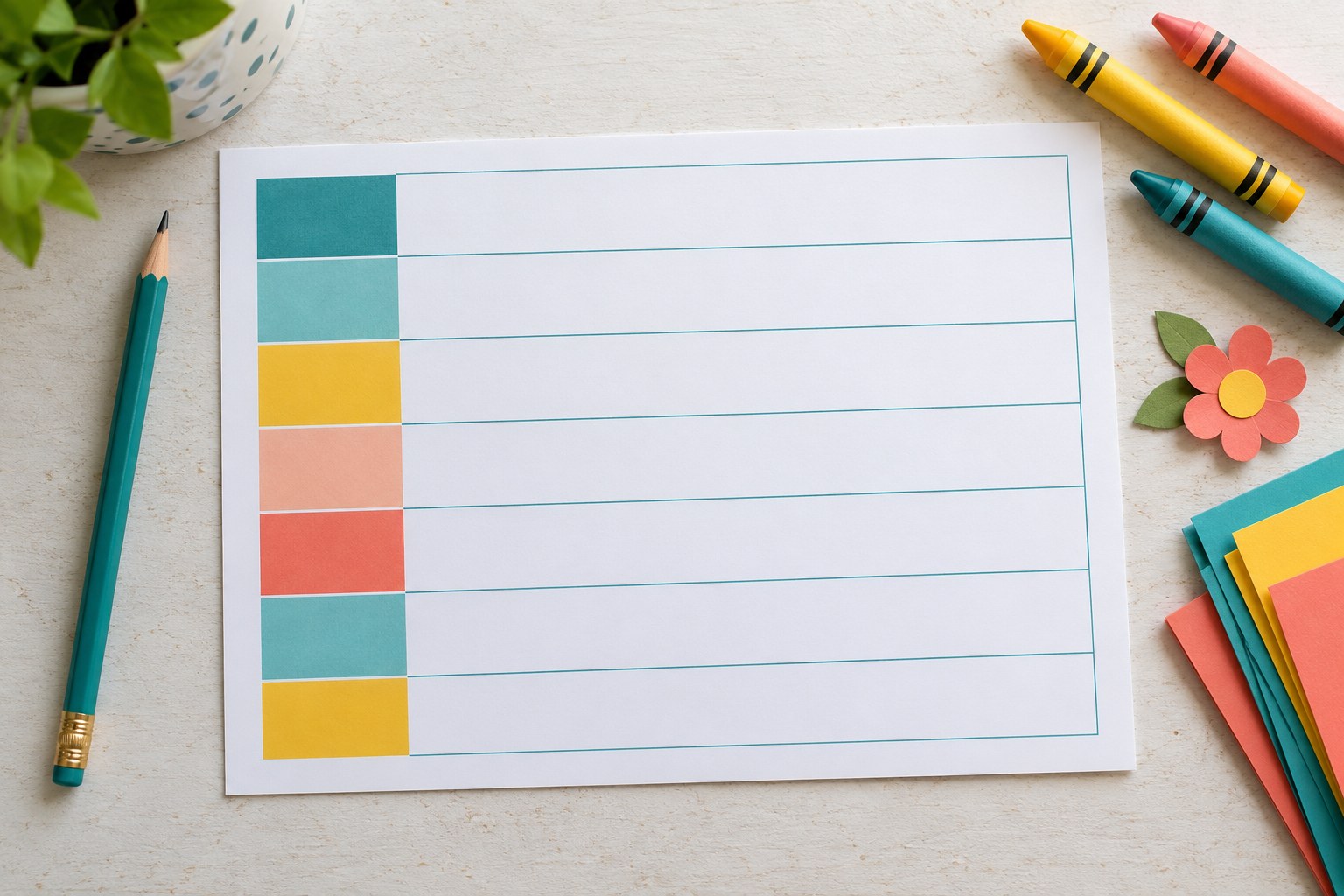
The one-page PDF has seven rows, one for each day, with space for an activity idea and the supplies it needs. There is also a line for a favorite activity to repeat. Print it on letter paper, or select fit to page for A4. It uses a simple layout that works in color or grayscale and does not require an email signup.
Start with the week you actually have
Before choosing activities, look at appointments, school days and other commitments. Mark a busy day as “free play” or leave it empty. A planner is useful when it reduces decisions, not when it fills every available hour. Two or three planned activities may be enough for the whole week.
Think about when an activity is most likely to fit. A short drawing prompt might work before dinner, while a cardboard build needs a longer stretch and somewhere to leave unfinished work. Keep the plan visible to the adults using it, but do not treat it as a promise that every activity must happen.
Choose a small mix of activities
Pick one making activity, one game and one easy backup. For example, plan a paper collage, a round of animal charades and a look-and-point scavenger hunt. Repeating a favorite is a useful choice, not a gap in the plan. Ask children to choose between two realistic options rather than asking them to invent the whole week.
A sample week you can change
Monday: draw with crayons already on the table. Tuesday: try a short matching game. Wednesday: leave the row blank for rest or free play. Thursday: make something from an empty box. Friday: repeat the favorite activity. Saturday: take a look-and-point walk if conditions suit your family. Sunday: tidy the activity tray and choose one idea for next week. This is an example of a flexible rhythm, not a recommended amount of structured play.
Write the supplies beside the idea
Keep supply notes specific and short: “paper, crayons, glue” is more useful than “craft things.” Check what you already have before adding anything to a shopping list. Place materials for the next activity in a tray when practical, keeping scissors and other tools stored appropriately between sessions.
If an activity needs a printed sheet, download it ahead of time. Our animal charades cards and counting cards can be used again, so you do not need a fresh printable every day.
Keep one no-prep backup
Choose an activity that works when your original plan does not: drawing a silly creature, telling a story together or finding objects with a particular color. A backup should use things already available and take little explaining. Our rainy-day activity guide has options for different amounts of time and energy.
Review what worked, then reuse it
At the end of the week, ask which activity someone would like to do again. Write it on the repeat line. Cross out plans that did not fit without treating them as unfinished tasks. You can reuse the same rhythm next week, swap two days or start with a blank sheet. The planner belongs to your family’s routine, not the other way around.
Can children fill it in themselves?
Yes. Children can write an idea, draw a small reminder or dictate while an adult writes. Younger children may enjoy choosing the activity for one day. Keep the choices achievable and leave the final plan flexible.