Simple activities. Colorful little moments.

9 Rainy-Day Activities for Kids Using Everyday Supplies
Try nine rainy-day activities for kids using paper, socks, boxes and crayons. Find quick setup instructions, quiet options and easy age adaptations.

The easiest rainy-day activities for kids start with what is already within reach: paper, socks, cardboard boxes and a few crayons. Choose one activity that matches the room and your child’s energy instead of setting up a whole afternoon of projects.
These nine ideas include movement, making and quiet pretend play. Most suit children around ages 3 to 8 with adjustments and adult supervision. The suggested times are flexible; a five-minute game can become a much longer adventure if a child wants to keep going.
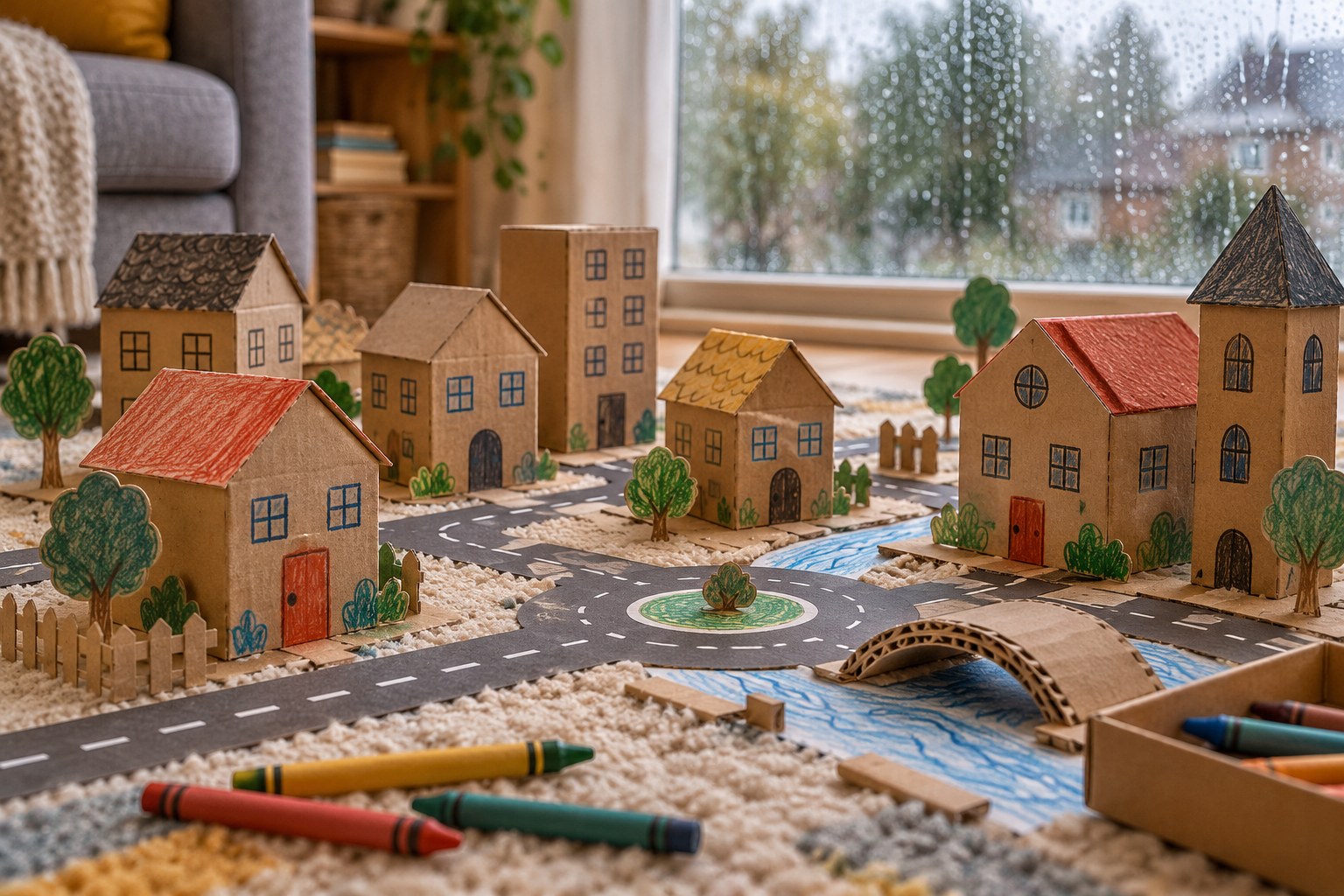
1. Build a cardboard town
Give children clean, empty boxes and crayons. Draw doors and windows, arrange the boxes into streets and add a paper park. An adult can remove staples and cut any openings first. Younger children may enjoy lining up houses; older children can draw a map and invent a delivery route. Allow about 20 minutes to start.
2. Open a sock-sorting shop
Place a small basket of clean socks beside two empty baskets. Children can sort by color, match pairs or pretend customers have requested ‘two stripey socks.’ Put pairs together at the end so cleanup becomes part of the game. Start with six socks for a younger child and add more only if wanted.
3. Try a look-and-point scavenger hunt
Ask everyone to find something round, something soft and something red without moving it. Keep the search in one safe room and avoid climbing or opening cupboards. Our free indoor scavenger hunt adds a printable checklist and more clues when you want a ready-made version.
4. Make a torn-paper garden
Tear colored paper into large petals and leaves, arrange them on a background and attach them with a glue stick. There is no right number of petals. Children who prefer drawing can add stems with crayons. Follow the torn paper flower craft for a complete supply list and step-by-step guide.
5. Play seated animal charades
Take turns pretending to be an animal using your face, arms or whole body. An elephant trunk, butterfly wings or a cat washing its face all work without running. Offer two animal choices when a player gets stuck. Let anyone pass, and keep the first round cooperative rather than competitive.
6. Run a paper drawing relay
Each player draws one shape on a sheet and passes it to the next person, who adds something. Continue until the group decides the picture is finished. A circle might become a wheel, then a bus, then a bus driving on the moon. With one child, take alternating turns together.
7. Make a soft-target toss
Set a wide laundry basket on the floor and gently toss rolled socks toward it from a short distance. Clear the area first and keep the basket away from windows, pets and breakable objects. Bring it closer for an easier turn. A seated player can use the same setup with the basket positioned comfortably.
8. Create a story from three objects
Choose three safe household objects, such as a spoon, a scarf and a toy vehicle. Start a story that includes one of them, then let the child add the next part. Ask ‘What happens next?’ instead of steering toward a correct ending. A child can act or draw their part rather than narrating it.
9. Open a tiny art gallery
Lay finished drawings on a table or arrange them along a low shelf. Invite the artist to give each one a name. Visitors can describe something they notice and ask one question about the picture. This is a calm way to finish an active afternoon without needing a new set of supplies.
Choose a rhythm that fits your afternoon
Try one movement game, one making activity and a quiet finish, with breaks whenever needed. For example, begin with sock toss, make a collage and finish with a story. You can also stay with a single activity if it is going well. There is no need to rotate on a timer.
The American Academy of Pediatrics’ overview of play describes the value of playful time with adults and peers. Here, that can be as simple as sharing a drawing or following a child’s pretend story.
Make setup and cleanup manageable
- Offer a small selection of materials instead of emptying every craft drawer.
- Use a tray for scraps and one basket for reusable supplies.
- Explain the play area before movement games begin.
- Keep a quiet option available for anyone who wants to step away.
What can we do with almost no supplies?
Choose charades, a spoken scavenger hunt or a shared story. All three work without printing anything. If only one sheet of paper is available, the drawing relay can fill it with contributions from the whole family.