Simple activities. Colorful little moments.

Space Birthday Party at Home: A Simple Activity Plan
Plan a space birthday party at home with paper planets, cardboard rockets and gentle group games. Includes a flexible schedule, supplies and easy adaptations.

A space birthday party at home can be built around paper planets, a cardboard rocket and a few imaginative missions. You do not need a room full of decorations to establish the theme. One activity table and a clear area for group play are enough to give guests somewhere to begin.
The plan below is a flexible 75-minute activity sequence, with food and cake time handled separately. It suits a small group with adult help. Adjust the pace to the guests rather than trying to finish every mission, and offer a quiet drawing option throughout the party.
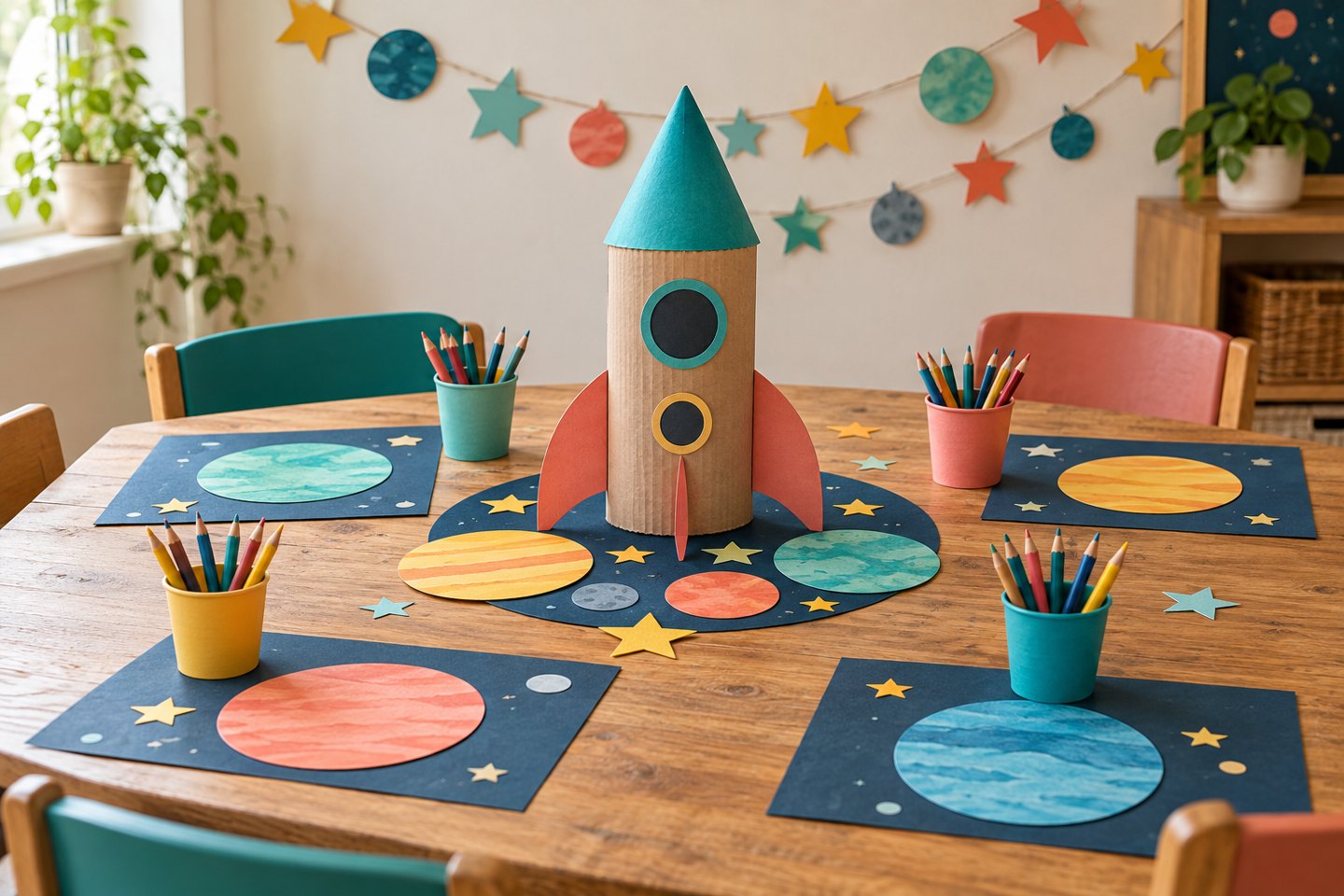
Pick three activities before buying supplies
Choose one arrival craft, one shared mission and one short game. For this party, those are decorating a paper planet, building a cardboard rocket together and playing a seated space-command game. Keeping the list short makes it easier to prepare materials and help children who need support.
Ask caregivers about access needs and food allergies before planning the event. Choose craft materials appropriate for the guests and have adults handle difficult cutting. Keep exits and walkways clear; cardboard creations are props for hands and toys, not structures for climbing or wearing over a child’s head.
Gather the party supplies
You will need paper circles or plain paper, crayons, glue sticks, clean small cardboard boxes, paper tape and a large sheet for a shared space scene. An adult can prepare circles and a few simple rocket fins in advance. Provide enough working space and a clear place for finished crafts to dry.
Decorations can come from the same materials. Tape a few paper stars to a wall where permitted, and place a small cardboard rocket on the activity table. Keep hanging decorations well away from faces and pathways. There is no need for loose glitter, balloons or flashing lights to make the theme recognizable.
Arrival: design a planet
Set out a paper circle for each guest and invite them to invent a planet. It can have zigzag mountains, square lakes, stripes or tiny imaginary houses. Offer a few choices without making a finished example that everyone feels they must copy. Children who arrive later can join without waiting for a new round.
Write the child’s chosen planet name on the back if they want help. Place the finished planets on the large space-scene sheet, leaving room for more. This makes a shared decoration that grows as guests arrive and gives the group something to talk about during the next activity.
Shared mission: build a cardboard rocket
Put a small box on the table and ask what a pretend rocket needs. Children can add paper windows, draw controls and choose where the fins belong. Assign flexible jobs such as drawing, holding a piece in place or choosing colors, so helping does not depend on cutting skills.
Let the rocket remain imperfect and manageable. A cereal-sized box is easier to pass around than a large construction. For more practical assembly ideas, use our cardboard building guide. Take a short pretend journey once the rocket can stand or lie securely on the table.
Play space commands without elimination
Invite everyone to sit or stand in their own clear space. An adult calls a command and demonstrates a small movement: “look through the telescope” means making a hand circle near one eye; “float” means gently moving hands; “land” means placing hands on knees. Guests may watch or invent an alternative movement.
Introduce three commands first, then let volunteers lead. There are no players to eliminate and no need to move quickly. Avoid blindfolds, spinning challenges or running between furniture. If the group wants another seated activity, our picture bingo is an easy change of pace.
A flexible 75-minute sequence
Allow around 15 minutes for arrivals and planet decorating, 20 minutes for rocket building, 10 minutes for the command game, 15 minutes for a shared imaginary journey and 15 minutes for finishing artwork and gathering belongings. These are planning estimates, not a timetable guests must follow.
During the journey, visit each invented planet and ask its designer one optional question. What might a visitor notice there? What would the ground look like? Children can answer by pointing to their artwork. Finish the journey early if attention shifts, and leave a calm gap before any food or cake.
Make the plan work for your group
For a younger group, pre-cut shapes and offer fewer choices at a time. For older guests, add a paper map with a route between planets. For mixed interests, keep plain drawing supplies available beside the themed activity. Guests can take home their own planet artwork; separate party favors are optional. Our art birthday party guide has more ideas for organizing shared craft supplies.