Simple activities. Colorful little moments.

Pretend Post Office for Kids: Set Up a Simple Mail Game
Set up a pretend post office for kids with a cardboard mailbox, picture addresses and six letters. Includes sorting games, roles and easy delivery ideas.

A pretend post office for kids turns drawing, sorting and delivering into one connected game. Children make a message, decide who it belongs to and carry it to the right place. Unlike a shop game, the interesting challenge is following a destination: how will the letter reach its recipient?
Allow about 15 minutes for an adult to prepare a small setup. Begin with two delivery places and six messages. One child can run the whole route with an adult, or two to four players can share the jobs. Reading and real postal addresses are not needed.
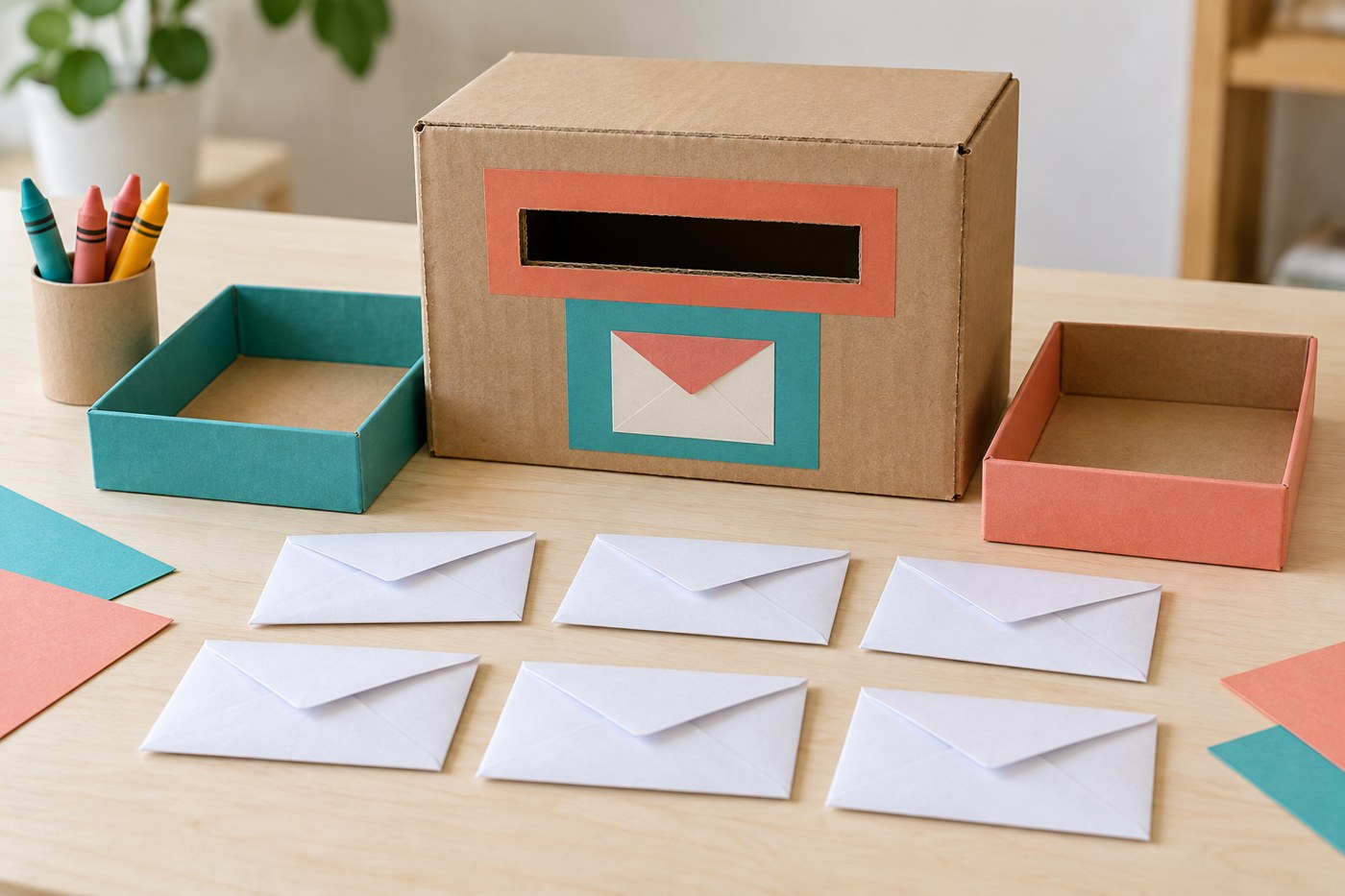
Gather a small mail kit
Use one clean cardboard box, six pieces of scrap paper, two shallow trays, crayons and paper tape. A small basket can hold deliveries. Envelopes are optional: folding a message in half is enough. Choose supplies suitable for the children taking part, and have an adult remove staples, plastic packing and rough edges.
An adult can cut a broad slot in the box front and cover its edges with tape. Make the slot wider than your folded letters. Leave the box lid accessible so the mail can be collected without reaching through a narrow opening. An open basket works just as well if cutting a mailbox would delay the game.
Give each destination a picture address
Set a teddy on one chair and a toy rabbit on another, with a clear walking route between them. Draw a simple bear picture for the first destination and rabbit ears for the second. Attach each sign at a comfortable viewing height. These pictures are your play addresses.
Draw the same symbol on the outside of each folded message. Keep the marks large and different enough to recognize. Use imaginary characters or familiar first names; there is no reason to write a child’s real home address or other personal details.
Make, post, sort and deliver
First, draw something inside a message: a flower for Teddy, a carrot for Rabbit or a colorful pattern. Fold it, add the destination symbol outside and post it through the slot. Make a few letters before opening the mailbox.
Next, collect the letters through the lid. Put the bear-address letters in one tray and rabbit-address letters in the other. Check a letter by matching its symbol to the tray’s sign. Finally, carry one tray along the route and leave each letter beside its recipient.
For example, a message with rabbit ears goes into the rabbit tray, then to the rabbit’s chair. Open it together and invent the recipient’s response. A drawing of a cup might become an invitation to a pretend tea party.
Share jobs without creating a queue
With two children, one makes and posts messages while the other sorts and delivers; swap after three letters. With more players, separate the writer, collector, sorter and carrier roles. Agree on the swap point before starting so one child does not keep the popular job indefinitely.
A child who prefers seated play can sort at the table or direct an adult carrier. Someone who does not want to draw can choose a paper color or dictate a short message. Add a third destination only when the first two are easy to distinguish.
Try a problem the post office can solve
An unclear address: draw a letter with no destination and ask what information the carrier needs. Put it in a separate ‘check with the sender’ tray rather than guessing.
A changed route: move a recipient’s sign to another agreed place and walk the new route together. A reply: deliver a message, then ask the recipient to send one back. These changes add a purpose without requiring scores or speed.
Pack away and play again
Store the signs and messages inside the box. Keep only a few letters for the next session so sorting does not become a large cleanup task. If the slot catches paper, enlarge it with adult help or switch to the open-basket version.
Extend the route to a pretend shop, or make a tiny street using our cardboard building ideas. The mailbox can stay simple while the stories change.
[…] our cardboard building ideas for another session. The pretend post office can supply a delivery game for a town you […]
[…] during the week. Open the box together, but allow private delivery if someone prefers it. Our pretend post office activity can supply the delivery-game […]