Simple activities. Colorful little moments.

Pretend Play Shop for Kids: An Easy Cardboard Grocery Store
Build a pretend play shop for kids with cardboard boxes, paper groceries and simple role-play ideas. Includes setup tips and five ways to keep playing.

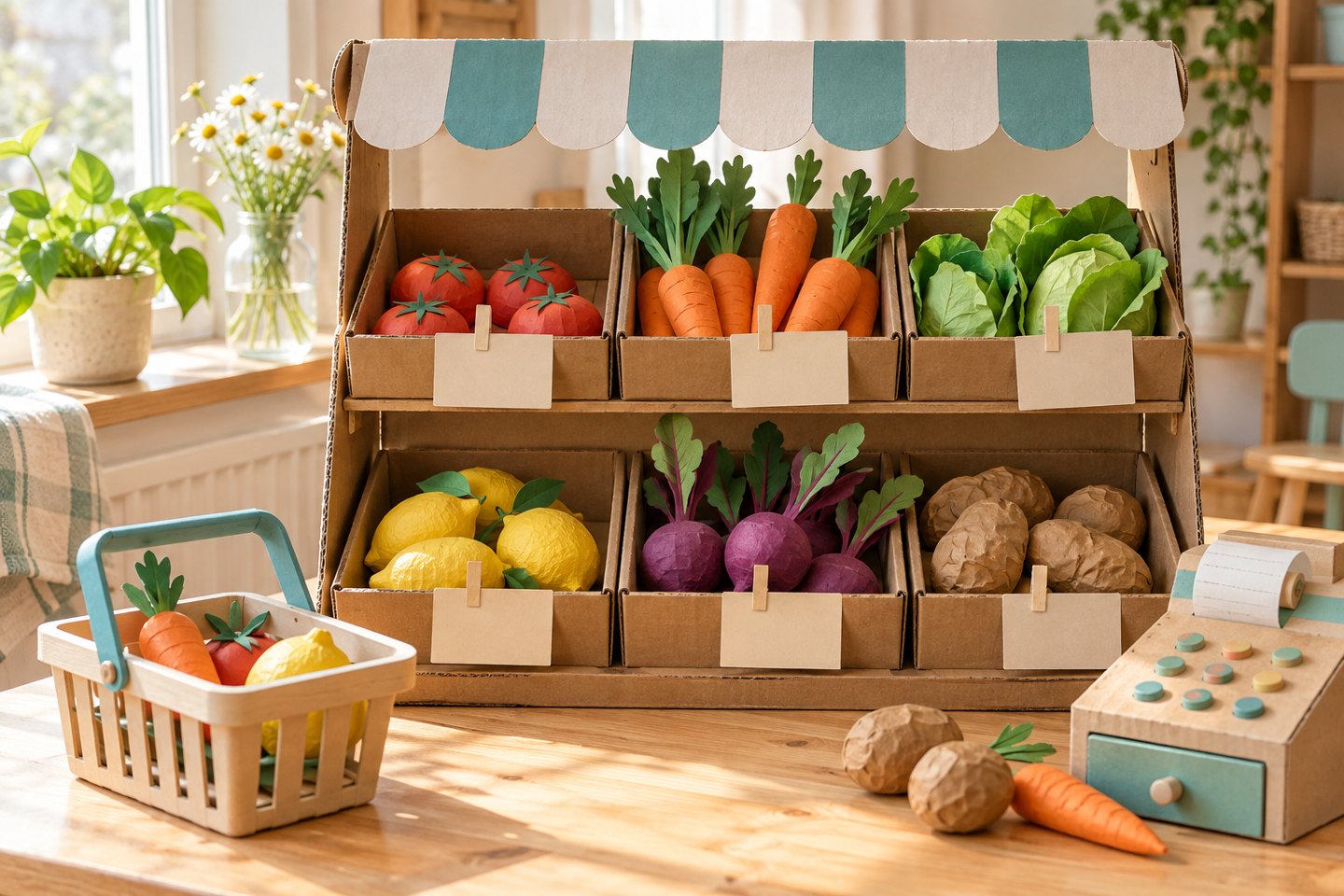
A pretend play shop for kids can start with one empty box and a few things already in the playroom. There is no need for a toy checkout or a complete set of pretend food. A low counter, a basket and a handful of paper groceries are enough to begin a shopping story.
This setup works well for children who enjoy make-believe, with an adult helping as needed. Allow about 15 minutes to prepare it, then let the play last as long as it stays interesting. Keep the first shop small: six products are easier to arrange and put away than an entire pretend supermarket.
What you need for a cardboard shop
Gather one sturdy cardboard box, two shallow trays, scrap paper, crayons, a basket or reusable bag, and paper tape. Optional extras include large paper price cards and a notebook for shopping lists. Adults should remove staples, sharp packaging edges and loose plastic before the box reaches the play area. Use large paper tokens instead of real coins around children who still mouth objects.
1. Make a counter and two shelves
Place the box on its side on the floor, or use a low table as the counter. Put a tray on each side for the groceries and leave a clear space in the middle for checking out. Avoid stacking boxes into a tall display. A simple arrangement is easier for children to reach and less likely to tumble during an enthusiastic shopping trip.
2. Stock the shop with paper groceries
Draw apples, carrots, bread and cartons on folded scrap paper. Children can color or crumple large pieces into their own pretend produce. If you use empty food packaging, choose clean, dry items with no sharp rims. Group similar groceries together, then invite the shopkeeper to decide where everything belongs. The products do not need to look realistic to work in the story.
3. Choose simple roles and start shopping
One person becomes the customer and another the shopkeeper. An adult can model a short exchange: ‘Hello! I would like two apples, please.’ The shopkeeper puts the items in the basket, and the customer carries them to a pretend kitchen. Swap roles after a few purchases. For solo play, a teddy bear can be the customer while the child supplies both sides of the conversation.
Five ways to extend the pretend shop
Picture shopping list: draw three items for the customer to find. Children who are not reading can use the pictures independently. Keep the list short enough that shopping remains playful.
Delivery service: pack a basket and deliver it to a cushion ‘house.’ Restocking job: move the groceries back to their trays after each visit. These roles give extra players something clear to do.
One-token prices: charge one large paper token for each item, then count the items together if the child wants to. Change the shop: replace groceries with toy animals, paper flowers or books. The same counter becomes a pet shop, florist or bookshop without a new construction project.
Keep the activity easy to manage
If the play stalls, introduce one small event: the shop has run out of carrots, or a teddy needs a picnic. Avoid adding lots of rules at once. A child who prefers sorting can arrange products without acting out a conversation; another may want to invent signs and opening hours. Both are useful ways to enjoy the same materials.
Finish by storing the paper groceries inside the counter box. Save the children’s signs for another day, or turn the box into one of these cardboard building activities. For another indoor option using everyday supplies, browse our rainy-day activities for kids.
[…] the puppets inside the box when finished. Reuse the stage as a ticket booth or combine it with a pretend play shop. If the construction was the favorite part, explore more cardboard building activities for […]