Simple activities. Colorful little moments.

7 Autumn Nature Activities for Kids Beyond Halloween
Explore seven autumn nature activities for kids, from leaf rubbings to weather journals. Includes indoor alternatives and simple ways to use found leaves.

Autumn nature activities for kids can start with one leaf, a short walk or a view through the window. You do not need a forest trip or a basket full of seasonal supplies. These seven ideas invite children to notice colors, shapes, textures and changes in the world around them.
Choose the activities that match the season where you live. Some places have bright leaf color, while others have evergreen trees, wetter weather or very subtle changes. There is no need to find a particular kind of leaf for these activities to work.
1. Take a color-noticing walk
Choose three colors before you leave and look for them along a familiar route. Children can point, describe or draw what they notice after returning home. Keep the walk short enough to enjoy stopping. If walking outside is not practical, look through a window or search a garden from a comfortable seat.
Look without picking plants, and stay on permitted paths. An adult should check anything collected from the ground. Avoid unknown berries, mushrooms, sharp objects and leaves that may irritate skin. Finding something interesting does not mean it needs to come home.
2. Make a leaf rubbing
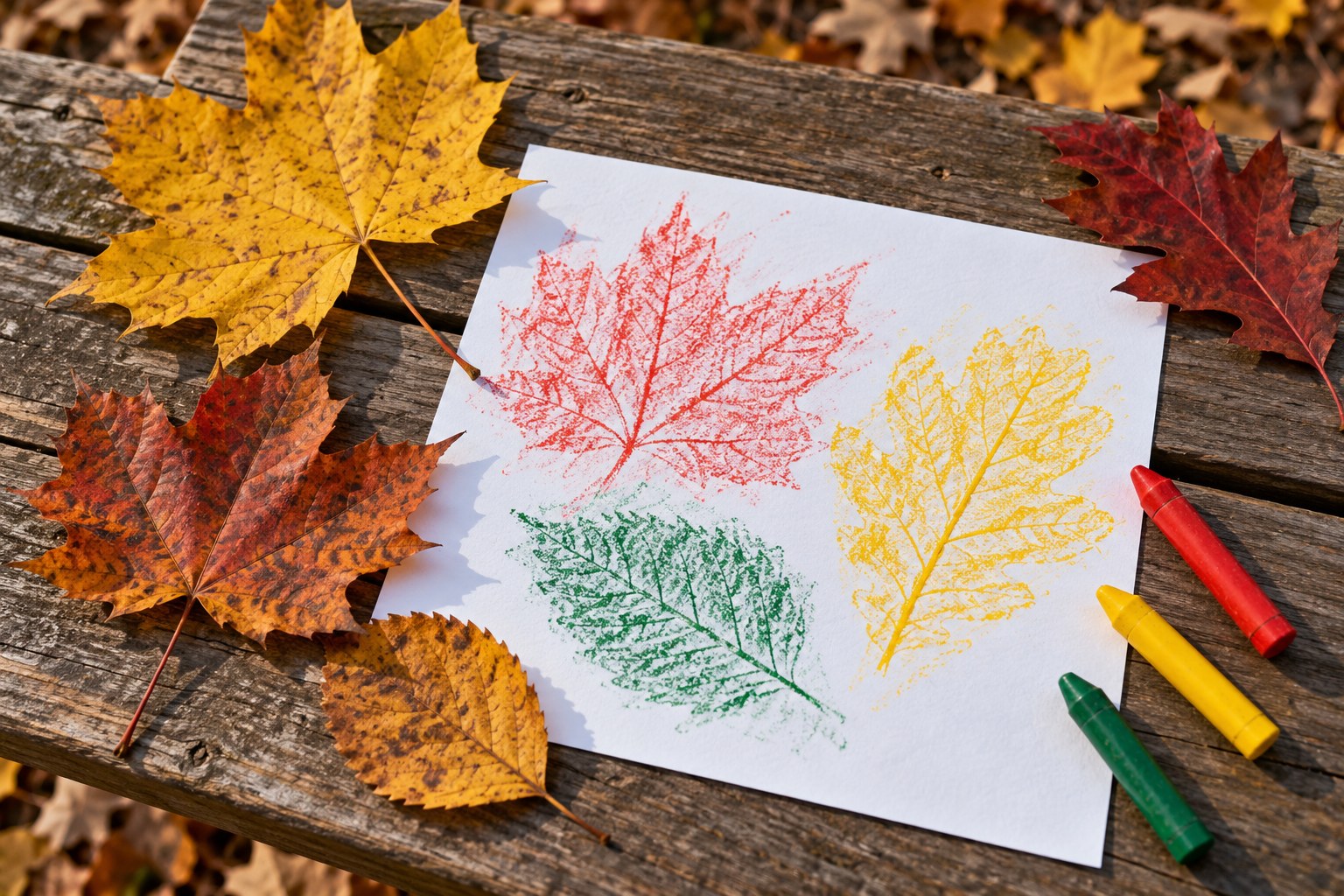
Place a dry, reasonably flat leaf underneath a sheet of thin paper, with its raised veins facing upward. Hold the paper still and rub the side of an unwrapped crayon gently across it. Start lightly so the leaf’s texture appears before the whole area fills with color.
Try a second leaf beside the first and compare their outlines. If the paper slips, an adult can hold it down. If no suitable leaves are available, use another safe textured surface and call it a texture rubbing instead.
3. Sort leaves in more than one way
Lay a few checked, fallen leaves on a tray. Ask, ‘How could we put these into groups?’ A child may choose color, size, shape or how crinkly they look. Mix the leaves up and try a different rule. The interesting part is explaining a choice, not finding one correct sorting system.
4. Build a repeating pattern
Arrange two kinds of leaves in a simple sequence: large, small, large, small. Ask what could come next. Try color patterns if the leaves are similar in size. Children can draw the pattern on paper or make one with paper shapes when natural materials are unavailable.
For a number extension, count each leaf once as you move it into a line. Our printable counting cards offer matching dot groups for a separate indoor game.
5. Start a three-day weather journal
Fold a sheet into three sections or use three notebook pages. At roughly the same time each day, draw what the sky looks like and add one observation: windy branches, wet pavement or a warmer afternoon. Have an adult write the child’s words if they are not writing yet.
After three days, compare the drawings. Avoid deciding what the whole season is like from one small sample. The activity is about noticing daily differences and learning to describe them.
6. Make a temporary nature picture
Arrange fallen leaves on a clear patch of ground or an outdoor table to form a face, an animal or an imaginary creature. Keep it temporary: photograph the arrangement if you want a record, then leave natural materials in an appropriate place where collecting and returning them are allowed.
For an indoor keepsake, draw the arrangement or recreate it with torn paper. The same technique used in our paper flower craft works for an autumn tree with orange, yellow and brown paper leaves.
7. Tell a leaf’s journey
Choose a leaf and invent a story about where the wind might take it. One person starts with a sentence, then the next person adds something. A child can draw each stop instead of speaking. Separate observation from imagination by saying, ‘We saw this leaf on the path. Now let’s imagine an adventure for it.’
A small activity kit is enough
- Plain paper or a small notebook
- Chunky crayons or colored pencils
- A tray for a few checked, fallen leaves
- A bag for your own litter and a way to clean hands afterward
Keep collected materials away from mouths and wash hands after handling them. Use paper leaves instead for children who mouth objects or prefer clean, smooth materials. Stop outdoor activities when weather or the route is unsuitable.
What if it rains?
Try the weather journal from a window, create a paper-leaf pattern or tell the leaf story indoors. Our rainy-day activity list has more ideas using household supplies. If you are planning a celebration later in the season, see our existing Halloween games for kids.
Which activity should we start with?
Choose the one that needs the least preparation in your setting. One rubbing or a five-minute color search is a complete activity. Let a child’s questions guide whether you repeat it, change it or move on to something else.