Simple activities. Colorful little moments.

DIY Puppet Theater for Kids: A Simple Cardboard Box Stage
Make a DIY puppet theater for kids with a cardboard box and paper characters. Follow easy setup steps, three story starters and simple play adaptations.

A DIY puppet theater for kids can turn an ordinary cardboard box into a place for small stories. Start with two paper characters and a short scene: someone has lost a hat, a visitor has arrived, or a picnic needs saving. Children can invent dialogue, move the puppets or simply enjoy watching an adult perform.
Allow about 20 minutes to make a basic stage, then begin with a show lasting only a minute or two. This is a making-and-playing activity rather than a performance to rehearse perfectly. A low table or the floor can be the audience area, depending on where the puppeteer is most comfortable.
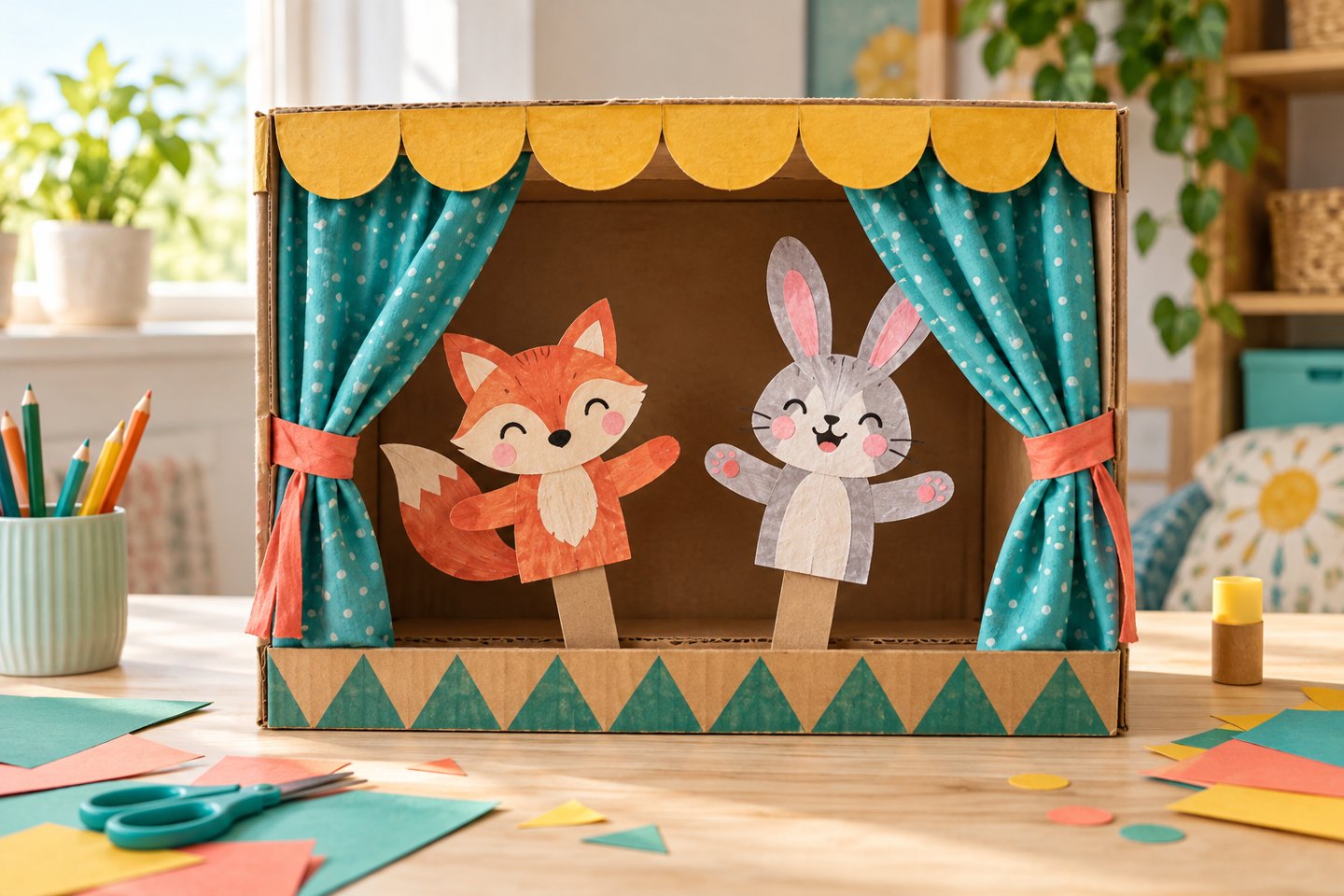
What you need
Gather a sturdy cardboard box, scrap card, crayons, paper tape and child-appropriate scissors. Two small fabric scraps can become curtains, but they are optional. Adults should handle cutting thick cardboard and remove staples or sharp packaging edges. Make puppet handles from broad folded card instead of pointed sticks, and avoid loose small decorations around children who mouth objects.
1. Create a stable stage opening
Choose a box that stands securely on one side. An adult cuts a wide rectangular opening in the front, leaving a generous border so the box keeps its shape. Leave the back open for access. If the box becomes floppy, shorten its height or use the opening as a flat frame held by an adult. Do not stack the theater on an unstable pile of furniture.
Cover rough cut edges with paper tape. Test the view from the audience position: the opening should be high enough for the characters to appear without the child stretching awkwardly. A smaller opening near the tabletop may suit seated play better than a tall stage.
2. Add curtains and a background
Tape fabric scraps to the top inside corners so they hang at the sides of the opening. Skip cords, drawstrings and tied loops; fixed curtains still suggest a theater. Slide a drawing of a garden or a house against the back when needed. Leaving the background blank makes it easy to change locations during a story.
3. Make two paper puppets
Draw a character on card, cut a simple outline and tape a broad card handle to the back. Large shapes are easier to see than tiny details. A cat, a bird or an imaginary creature is enough to begin. Children can also move a favorite soft toy through the opening if drawing and cutting would delay the play they actually want.
Three story starters for the first show
The missing hat: one character asks a friend to help find a hat. Try two silly hiding places before discovering it. The unexpected guest: a visitor arrives at a picnic and needs a place to sit. The broken bridge: two characters work out another way to cross an imaginary stream. Keep the problem small enough to solve in a few exchanges.
An adult can ask, ‘What happens next?’ when a child wants help, or play the second character while the child leads. There is no need to insist on a beginning, middle and ending in every session. Sometimes making the puppets wave hello is the whole show.
Ways to include different players
Offer roles beyond speaking: moving a puppet, drawing a backdrop, making gentle sound effects or welcoming the audience. A child who dislikes performing can direct an adult instead. For a shared show, agree on whose puppet speaks first and keep enough space behind the stage for comfortable movement.
Store the puppets inside the box when finished. Reuse the stage as a ticket booth or combine it with a pretend play shop. If the construction was the favorite part, explore more cardboard building activities for kids.