Simple activities. Colorful little moments.

Free Printable Comic Strip Template: 3 and 6 Panels
Download a free printable comic strip template with three-panel and six-panel pages. Plan a short story with a worked example, drawing tips and no writing requirement.

This free printable comic strip template gives children a place to turn one small event into a sequence of pictures. The two-page PDF offers three large panels for a short story and six smaller panels for a longer one. There are no characters to copy or speech bubbles that must be filled.
Start with a character who wants something simple: a dry place to sit, a missing hat or a turn on a swing. A complete story can fit in three pictures. Drawing and talking through the action are enough; writing is optional.
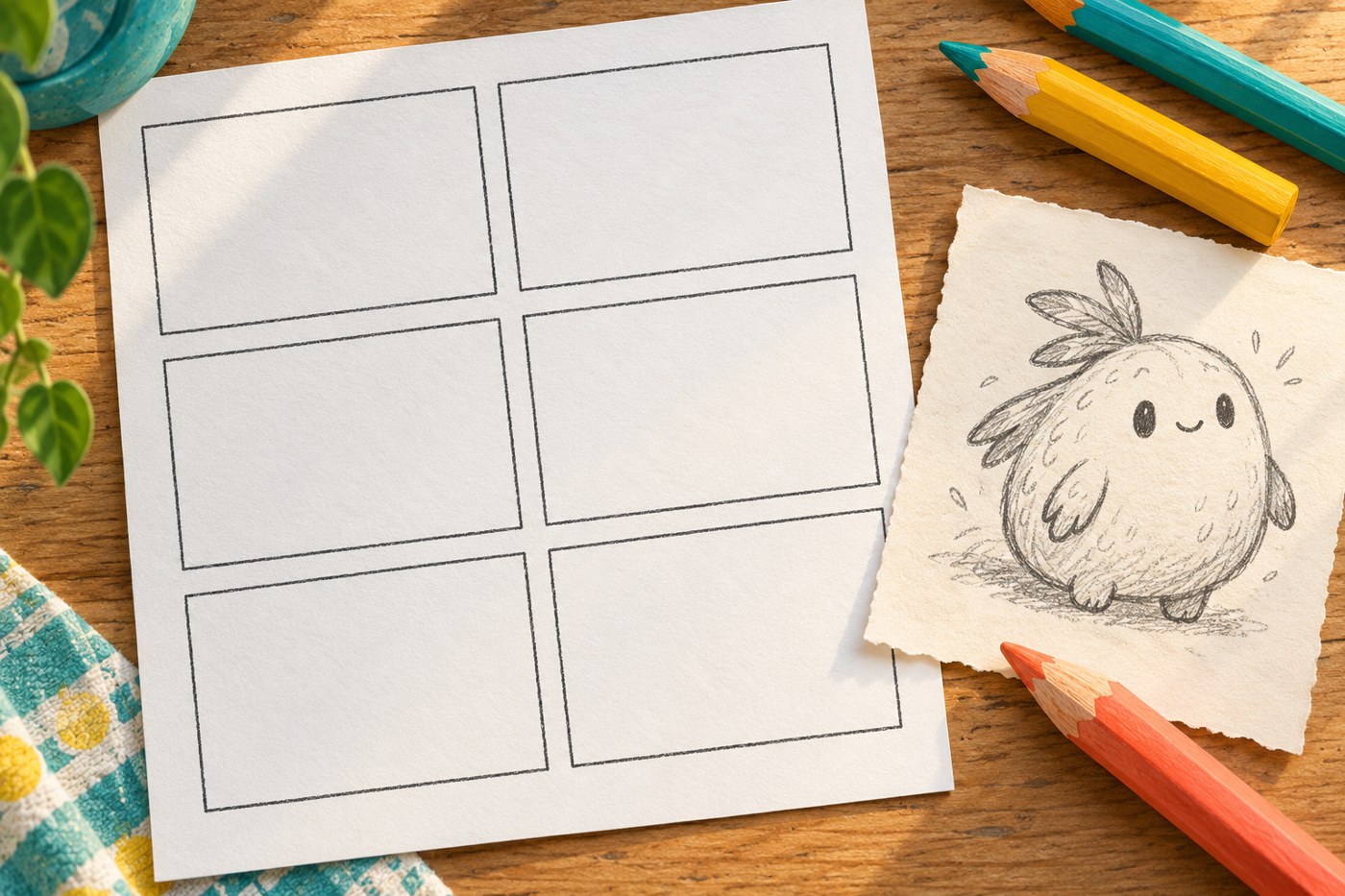
Download the two blank comic pages
Page 1 has three large panels stacked vertically. Page 2 has six panels arranged in two columns and three rows. Each page includes a title line. Both are black and white on US Letter paper; choose Fit to page for A4.
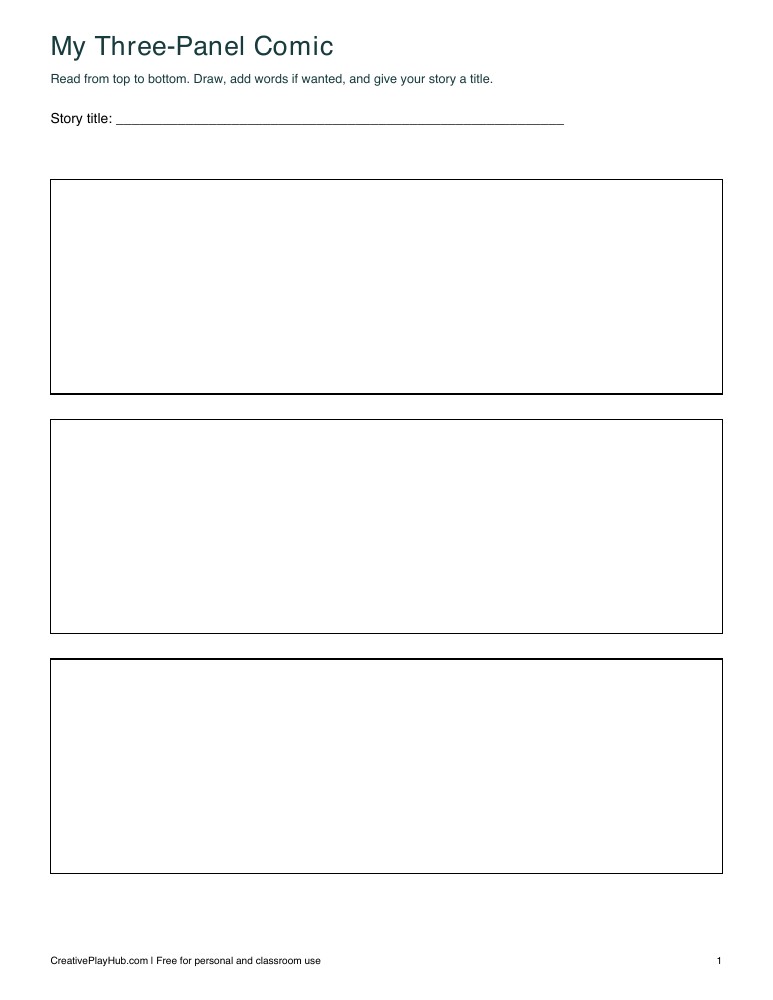
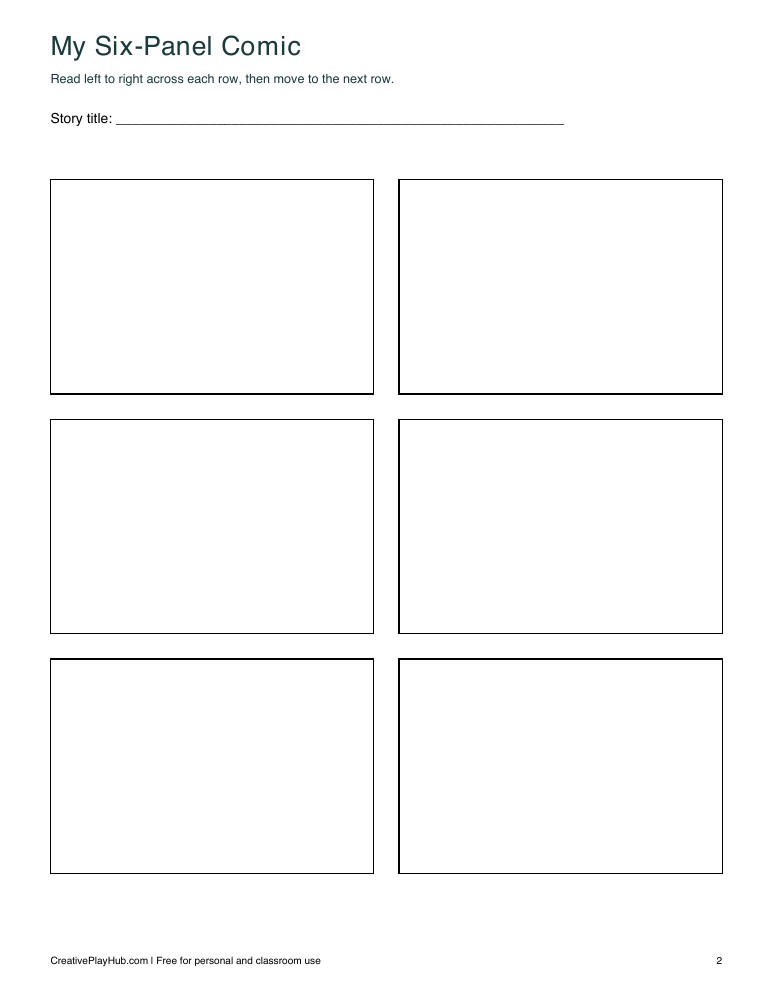
Print only the layout you want. The generated illustration is a creative example, while the actual PDF preview shows the blank template supplied. No email signup is needed. Use a pencil and eraser first if the child likes revising, or go straight to crayons.
Choose three panels for the first story
Read the three-panel page from top to bottom. Use the first panel to show the character and situation, the second for a change or small problem, and the third for what happens afterward. This is one possible structure, not a rule every comic must follow.
Before drawing, tell the story in three short sentences. If the middle sentence contains several separate events, simplify it or choose the six-panel page. The planning can happen aloud while an adult listens; no written outline is required.
Try this worked story: the traveling hat
Panel 1: a rabbit puts a hat on a bench. Panel 2: a breeze carries the hat onto a low bush. Panel 3: the rabbit retrieves it and puts it on. Keep the bush within easy reach in the drawing rather than turning the ending into a climbing challenge.
Use the same hat color in all three panels so the reader can follow it. A few curved lines can show the breeze. The rabbit can be a circle with long ears; detailed drawing is less important than making the change visible.
Use six panels when the action needs more space
Read across the top row from left to right, then move to the next row. Add small numbers in the corners if that reading order is unfamiliar. A six-panel version of the hat story can separate putting down the hat, noticing the breeze, watching it move, looking for it, finding it and wearing it again.
Do not add events just to fill every rectangle. Leave unused panels blank, turn them into a title or ending picture, or return to the three-panel page. A short clear sequence is easier to follow than an overcrowded one.
Make words fit the picture
If adding dialogue, write a short phrase in pencil before drawing its speech bubble. That avoids squeezing words into a bubble that is too small. Point the bubble’s tail toward the speaker. A caption can sit at the top or bottom of a panel if no character is speaking.
Wordless comics also work. Change a face, point an arm toward an object or move the object between panels. An adult can write dictated words separately if the child wants the picture to stay uncluttered.
Solve common comic-making snags
No idea: choose one character and one object, then ask what changes. Too much action: draw only the most important moment in each panel. Characters look different: keep one recognizable feature, such as long ears or a striped shirt, without demanding identical drawings.
Someone else cannot follow the story: ask which panel confused them, then add one clue there. Avoid redrawing the whole page for the child. Their explanation may also reveal that the sequence is intentionally surprising.
Share or save the finished page
Ask the creator whether they want to show the comic, read it aloud or keep it private. Store pages in a folder and date the back if useful. The templates are free for personal and classroom use; share the article link rather than selling or redistributing the PDF.
For a different starting point, use our drawing prompt cards. Characters from the roll-a-creature game can become the stars of a later comic.
[…] For a bigger challenge, repeat the same starting mark in four boxes and invent four different endings. Another option is to connect three finished pictures into a beginning, middle and end using our comic strip template. […]
[…] interrupted by rain is enough of a problem. Children can dictate captions to an adult. Use our free comic strip template if you prefer prepared […]